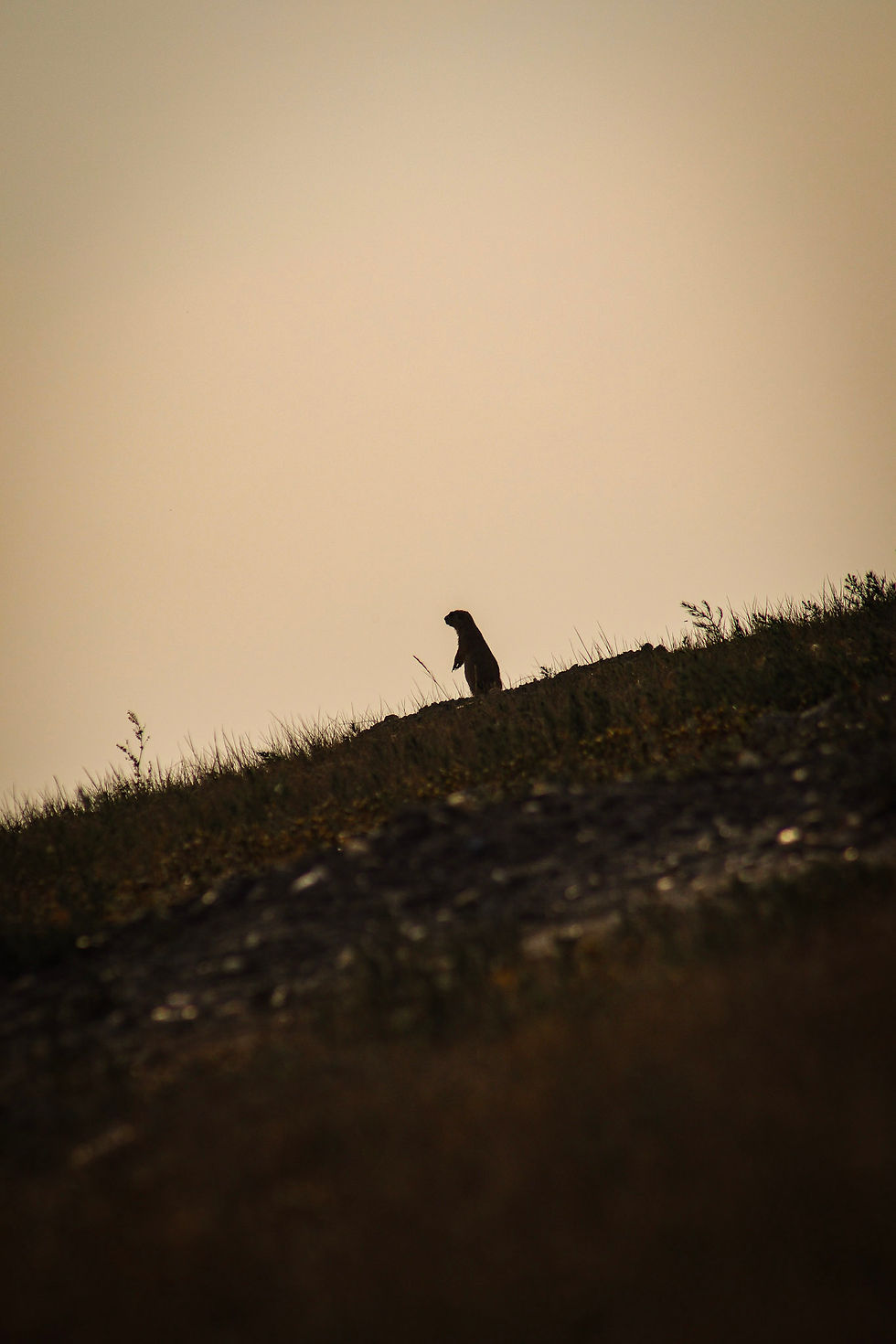
How to Hunt Prairie Dogs in South Dakota - Without a Guide!

A prairie dog hunt is an excellent opportunity to get out into the wild with your rifle, test your skills in spotting and ranging, and challenge your shooting on small, far away targets. You can stay busy all day in the right area, and you’ll come away with a better appreciation for your skill, equipment, and the natural landscape. In this article, we’ll look at how to get out on your very first prairie dog hunt in South Dakota, without needing a guide. This information comes direct from my experience planning a hunt during a family vacation to South Dakota.

Before we start, I want to be very clear that a guided hunt for your first time is a great choice. Local guides and outfitters will have much more knowledge of the land and laws, and will be able to put you in the best spot for a successful hunt, including access to private ranches with large and active prairie dog colonies. In no way do I discourage the use of a hunting guide, and actually recommend using a guide over doing it yourself for the first time. However, for our family trip to South Dakota, I was limited by two factors: first, I could only spare about a half day for a hunt in order to get in ALL of the other things we wanted to see and do on our trip. Second, the expense of a guide was a
little too much for me. Many outfits were roughly $400/person for a full day of shooting, and since I was bringing my son as well, the cost was outside of my budget for the trip.
WHERE TO HUNT
Knowing I’d have to manage the hunt on my own, and with no experience doing this before, I reached out to a friend who lives in South Dakota and already had some good experience with prairie dog hunts. His information was incredibly valuable to our success. First, we learned which public areas were allowed for shooting. Much of the public lands available near the area we were staying were the National Grasslands, which offer public access to hunting. As the National Grasslands are so vast, this was where I began my research. As I went further into the search for a good hunting location, I learned about other public land opportunities as well. The Bureau of Land Management, Game Production Areas, and state lands can also be available opportunities for a hunt.
Another interesting area for hunts in South Dakota are Walk-In Areas (WIA). These are privately-owned ranch lands that the state leases for the specific use of public hunting access. WIAs only allow hunting (no camping or other activities), may have some limitations on the game or type of hunting allowed (ie shotgun or archery only), and you can not drive onto the property. No further permissions from the landowners is needed to walk in for a hunt, and WIAs open up your opportunities for success if you’re up for hiking in.

MAPPING
In order to understand the boundaries between these publicly accessible areas, the OnX Hunt app is invaluable. OnX allowed me to do the bulk of my preliminary scouting for locations and colonies from the comfort of my couch in Florida. OnX Hunt is a map application that shows property boundaries for the area, including the different public and private lands. If the land is privately owned, it also shows the land owner information. OnX allows use of satellite, terrain, and weather map layers to help you before and during your hunt. I used OnX to do the majority of my scouting, ensuring the spots I found would be on National Grassland or WIAs, and using the terrain feature, ensuring we’d be able to make it there on foot or by vehicle.
It turned out that OnX was not the only map system I needed to reference. I used Google Maps quite a bit for identifying local roads, including street view for a better look at possible parking areas, and also to compare imagery of the prairie dog towns to see if they were active (more information on that below). During my research, I learned that there is a ban on prairie dog hunting within the Conata Basin area of the Buffalo Gap National Grasslands, which is the hunt area we would be in for this trip. The ban was put into effect to protect the endangered black footed ferret, which lives inside of prairie dog colonies in the area. As I continued the search, I now needed to reference the Conata Basin restricted area whenever I found a possible hunting spot.

The next map I needed to reference is called the Motor Vehicle Use Map (MVUM). Some of the areas I scouted were a bit of a stretch from the road. Our trip was in July, which meant it would be hot out, and I wasn’t sure my young son would be up for a long hike in the heat with gear. However, I noticed motorized trails going through a few of the locations we scouted on the satellite view, and found the MVUM reference map that let me know if we could drive on the trail to get closer to the hunt spots. Luckily, several of the spots had publicly accessible off-road trails, so we continued our focus to scout those spots, which might allow us to be co-located with our vehicle.
SCOUTING LOCATIONS
I mentioned that we used satellite maps to scout for prairie dog colonies, and it was surprisingly easy to get on them. While searching the National Grasslands and WIAs, all I needed to do was look for large areas that looked like they were covered in moon craters. The burrows that prairie dogs dig up leave light colored circles on the darker top grass layer, making colonies easy to spot from satellite views. This made our scouting from the couch extremely easy! Using the OnX Hunt app and cross-referencing the other maps I mentioned, I marked the location of about 20 different spots we could access and give us an opportunity for success. Then I color-coded the spots for size and accessibility so I’d know which ones we should head to first.
Knowing we might be out of cell service when we got on location, OnX Hunt allowed us to download the local area maps so that you don’t lose any data when there’s no service. I made sure to download the offline map, which included our primary location and a number of backup locations in case we needed to move around.

HUNTING LICENSE AND REGULATIONS
Now that the maps were planned and I was confident we’d get on some prairie dogs, I was ready to review the state hunting requirements and purchase a license. For this hunt, we needed to purchase a Non-Resident Predator/Varmint license ($46), which allows hunting of coyote, red fox, grey fox, skunk, prairie dog, jackrabbit, gopher, ground squirrel, crow, porcupine, and marmot. When purchasing a license, you’ll also need to purchase a Habitat Stamp ($25 for non-residents), which automatically gets added to the cart. Funds from the license and stamp go directly toward land and water projects, support management of hunting and fishing areas, and help fund access to WIAs.
While on the South Dakota Game, Fish, and Parks site, where licenses and stamps can be purchased, also take some time to review the state hunting regulations. The regulations will help you understand the hunting requirements for your trip. I double checked to make sure my suppressor and use of a semi-auto 5.56 would be acceptable for our hunt. South Dakota is very suppressor-friendly for hunting, and it also turns out that prairie dogs can be taken with any cartridge, from .50 cal down to air guns with muzzle velocity over 600 fps. There are no seasonal limits, shooting hour restrictions, daily bag limits, or caliber restrictions for prairie dog hunting in South Dakota.
TRAVELLING WITH A RIFLE
Let’s take a brief moment to touch on flying in the US with a rifle, which can be daunting for some. I fly with a rifle often, so here’s a few tips. Read both the TSA guide to flying with firearms, as well as the firearm policy of your particular airline. Use a hard-sided case and fill ALL of the lock holes with NON-TSA locks. You should be the only person that has access to open the locks; TSA should not be able to access them.
Ensure your rifle is unloaded. I prefer to keep an empty chamber indicator in the rifle during travel. Also ensure that your ammunition is stored in the factory boxes (or plastic containers if you hand load). You should not have ammo stuffed in magazines during the flight. Most airlines only allow up to 11 pounds of ammunition, which for this trip worked out to be about 300 rounds of brass case 5.56. If you fly with a suppressor like I do, you do not have to notify the ATF when travelling between state lines, but if you bring an SBR you’ll need to fill out a Form 5320.20 (Application to Transport Interstate) and submit it to the ATF.
Get to the airport a little earlier than normal as you might have some additional security checks. Note that the airline may charge you extra if the case weighs over 50 pounds, so be aware of weight in the case. Finally, for peace of mind, I add an Apple Air Tag inside the grip of my rifle, which helps me track the rifle around the airports and ensure I can help find it in the unlikely event it becomes lost.
GEAR
Since we’re on the topic of gear, let’s have a look at what we brought and what might have made the trip better for us. The rifle I brought along was our Sons of Liberty MK1 Recce, a 14.5” AR15 chambered in 5.56. I don’t consider this to be a hunting rifle, but it is my competition gun for the 2026 season and I have built considerable trust with it, so it was my most confident choice. The 5.56 cartridge meant we could bring about 300 rounds with us on the airplane so we’d have plenty of ammo for a half day of shooting. The rifle was topped with a Nightforce ATACR 4-16x optic, which would give us a clear view with a great reticle. On top of the optic was a Tango FIRE4000 weapon-mounted laser rangefinder, which made for fast ranging and ballistic readouts when we got on a target. The rifle has a Harris bipod attached for stability. Last, I have a Hux Flow can on the front to keep our ears protected and minimize stress on us for the day. We still used ear protection for the hunt though.

For support gear, we had a tripod topped with our Tripod Table and a support bag for glassing and shooting. I brought my 10x Vortex laser range-finding binos so that we’d both be able to spot and range targets (one person on the binos, the other on the rifle). We both had our Big Data Armbands for referencing range and ballistics with the rifle. I had my Kestrel wind meter with me to get a measure on the wind, as well as several mags to keep the gun topped up. Both of us wore pants, boots, and sunshirts to keep us happy in the hot weather, and I kept a medical kit with tourniquet with us. I brought along a toolkit and Garmin chrono, just in case. We had plenty of water and snacks for the trip, stored in a cooler in the rental car. Sunscreen and lip balm were also important in the dry weather.
There’s a few equipment changes I’ll make next time. The 4-16x optic is great, but I found myself wishing for a little more magnification. At matches, I usually work in the 12-14x range with this scope, but these targets were so tiny that I wanted a little more. Maybe an 18-20x optic would be better for me.
Next, we were using 77gr SMK projectiles. This was because I was very confident with getting impacts using that ammunition. After hitting a few prairie dogs, it seemed like the bullets were just passing through, rather than expanding or transmitting energy, so we ended up with a few blood trails leading back to holes. This was a little upsetting that some animals were not killed immediately. We’ll use a varmint bullet instead next time.
Finally, I figured most shots would be from the prone with a bipod as we were on mild, hilly terrain. However, because of the tall grass and general shape of the hills, we ended up taking the majority of our shots from the tripod. Luckily, we were prepared to do this, but it’s worth noting that the tripod and our Tripod Table were heavily used on this hunt.

ON THE HUNT
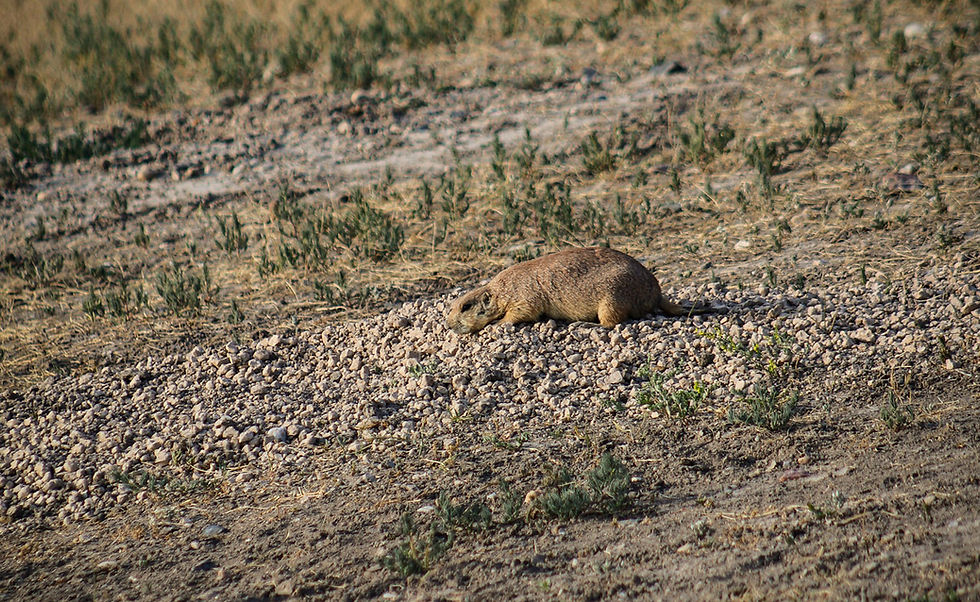
As we bounced over the dirt tracks and bottomed out the rental car, it was apparent that we were having a blast out in the wild. We made it to our first scouted position around 8AM and immediately got onto some prairie dogs! As soon as we shut off the car and stepped out, we could hear them barking back and forth to each other all over the place. They were also very easy to spot; their burrows are quite prominent, and they hang out right on top of the holes, so all we had to do was scan hole-to-hole and we found targets everywhere.
We started with some close ones to get warmed up. The wind was ripping at about 15-20 mph most of the morning, so wind and direction was on my mind. Our closest hit was at 89 yards, and many of the hits we got were within 250 yards. My furthest hit later in the morning was at 420 yards, and it took 3 shots to get on him. We identified targets beyond 800 yards, but the furthest shot we attempted was about 560 yards. If you want to brush up on your skills shooting at distance in wind, be sure to check out our article on Gun Number!
The moment we started shooting, the prairie dogs in this colony headed back to their holes. The ones further away from us took a little longer to head in, so beginning with the close targets seemed to benefit us a lot. My son and I traded off shooting and spotting quite extensively so that we’d both have opportunities for impacts. After the targets dried up, we moved another several hundred yards down the road to scout again!
The terrain we were on was quite featureless, so communication became an issue when talking each other on to targets using reference points. There were no major features that we could reference off of. Near the middle of the morning, we figured out that the biggest features we had were way out in the distance, like “row of trees,” “big hill,” or “radio tower.” Using these large features made it easier for us to communicate, but it was still tough to talk each other on to one of 2,000 holes in front of us! We’ll need to work on that for sure.
FIELD ETIQUETTE
It’s worth mentioning a few house-keeping items during the hunt. Being respectful of landowners in the area is very important for good relationships with hunters and ranchers, especially if you’re in a WIA or adjacent to private land. Try to avoid livestock in the area and be cognizant of other animals. We saw a number of cattle way out in the distance, and were surprised to see a ton of pronghorn in our shooting area as well.
Make sure you’re parking responsibly. I made sure to park in spots that had low or no grass right off the dirt trail, which helped make sure the lane was clear for anyone else coming through, and to ensure we didn’t set the grass on fire (the fire danger was very high while we were there). Pick up your brass when you’re done shooting in a spot and pack out any trash. Also, there may be a few gates you’ll need to move through during the drive. Make sure to close the gates properly behind you as you move through an area. We moved through three gates throughout our morning hunt.

A SUCCESFUL HUNT
Even though this was our first time hunting prairie dogs, we had a fruitful hunt. A ton of research and preparation went into the trip, and because of this effort, we got on to some prairie dogs right away and stayed on them throughout the morning. My son and I got to enjoy our National Grasslands, spend time together behind the rifle, and experience an unforgettable adventure.
Prepare for your successful trip with safety and ethical hunting in mind. Be respectful to land owners and other hunters. Learn and follow the state regulations for your area. And above all, enjoy your time in the wild, whether on your own or with family and friends. We have a beautiful nation that is ours to protect and explore.
Have a question? Drop it in the comments!